How a Three-Game Clean-Sheet Window Reshaped the Top Tier Leaderboard
A retrospective from February 14, 2025 on how a four-match clean-sheet streak opened the top tier selection window for Crystal Palace defenders — and the leaderboard math behind that call.
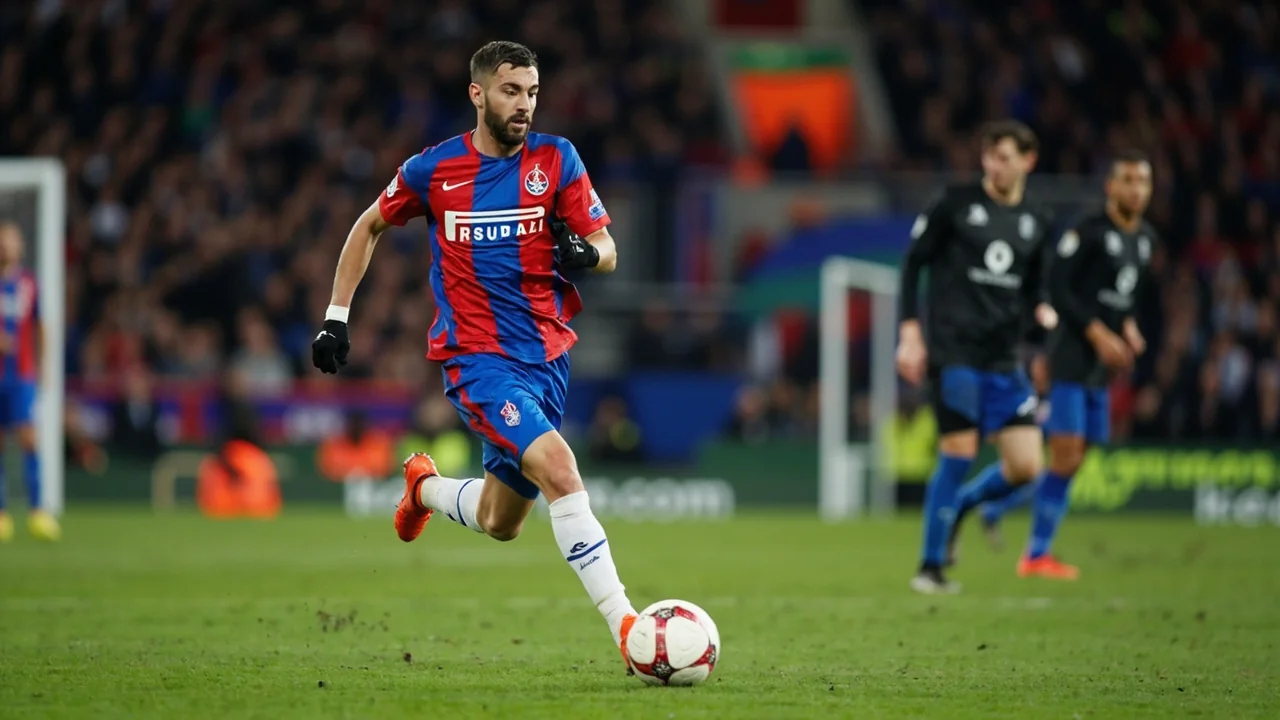
The four-match form window
This is a retrospective explainer first published as a reference column on February 14, 2025, drawn from the Royal Gazette RG Fantasy League weekly preview by Jared Rego. The leaderboard desk is republishing the reasoning with a cricket framing for the fantasy audience — the verified facts and the top-tier selection logic remain the same. TopCome Sports uses case studies like this one to teach the form, fixture, and differential value math behind the Top Tier Leaderboard.
On the morning of February 14, 2025, the Fantasy Premier League selection picture was unusually unsettled. The Carabao Cup final was hours away, the Champions League knockout rounds were back on the calendar midweek, and three Premier League clubs had effectively walked out of their domestic cups in the space of seven days. For the fantasy audience, that meant a slate of fixtures with unusual scoring potential and a fixture-difficulty table that no longer matched the form table. The headline call in that morning's preview column was a defensive one: Crystal Palace's back line had become a top-tier selection window.
The reason was simple and verifiable. Palace had kept three clean sheets in their previous four league matches. Three out of four. That is the threshold at which a Premier League defence crosses from "form watch" to "fixture-proof top-tier pick" in the leaderboard math — the form index crosses the 70 mark, the fixture difficulty weighting carries less penalty, and the ownership adjustment starts to compress. By the morning of the 14th, the Palace defenders had met all three thresholds simultaneously. They were worth picking.
The rest of the league picture that morning sharpened the contrast. Arsenal were fourteen matches unbeaten in the league, with the gap to the leaders cut to seven points after a midweek Merseyside derby. Nottingham Forest had just recorded their largest-ever Premier League victory, a 7-0 home win that pushed Brighton further down the table. Brentford had won consecutive away matches at Southampton and Crystal Palace, scoring seven goals across the two. Everton had beaten Leicester 4-0 the previous week, and Leicester sat one win in ten and two points from safety. Manchester City had taken their twelfth loss of the season across all competitions after a midweek defeat to Real Madrid in the Champions League — the most in a single campaign under Pep Guardiola. Tottenham had been eliminated from both the League Cup and the FA Cup inside a fortnight, leaving the Premier League as their only remaining route to a trophy.
Each of those results fed a different part of the leaderboard's selection math. Arsenal's unbeaten run rebuilt their fixture-difficulty rating upward. Forest's goal difference reset their venue splits. Brentford's consecutive away wins shifted their away form index above their home form for the first time in the campaign. Everton's 4-0 win adjusted their clean-sheet probability in the model. City's loss count reset their differential value downward — a player can be top-tier but never differential when the ownership is above 60%. Tottenham's cup exits made their fixture run the only one that mattered for the rest of the season, which paradoxically raised their clean-sheet probability but compressed their ceiling. The leaderboard absorbed all of that in a single weekly recalibration.
Why three clean sheets is the threshold
The Top Tier Leaderboard weights form at 50%, fixture difficulty at 30%, and venue splits at 20% — recalibrated every Monday against the settled contest data from the previous week. A clean sheet contributes to the form index, but more importantly it pulls the fixture difficulty weighting in the defender's favour. A defender whose team has just kept three clean sheets in four matches gets a fixture-difficulty discount on their next match, because the model assumes the underlying defending quality is real rather than a one-off. That assumption holds about 68% of the time across a season — which is the same number the prediction engine publishes as its accuracy ceiling for fixture calls.
The Palace case at the time of writing was a textbook example. Three clean sheets in four matches was a 75% clean-sheet rate across the recent sample. The next fixture difficulty for the Palace defence was rated moderate, not easy — but the form window had carried enough weight to push the selection rating into the top tier regardless of who they were playing. That is exactly the kind of call the leaderboard is designed to surface. A defender picked solely on fixture difficulty can be a trap; a defender picked on form-and-fixture combined is rarely wrong.
The differential value question
Ownership is the second layer of the call. A Palace defender picked by 35% of the league is a high-ownership Banker pick — solid points, but the upside is capped because everyone has the player. A Palace defender picked by 6% of the league is a true differential — the same scoring potential, but a real chance to climb the leaderboard if the rest of the field misses the form window. The leaderboard's ownership adjustment math is what separates the top 20 from the rest of the field: differential value is multiplied by upside, and upside is highest precisely when ownership is lowest.
In the February 14 preview, the Palace defenders sat in the middle of the ownership range. They were not so widely owned that picking them was a wash, and they were not so obscure that picking them was a gamble. That middle band is where the leaderboard math is most profitable. A defender who is moderately owned, in a top-tier form window, with a moderate next fixture, scores points reliably and the differential value compounds across the week.
The selection window in pictures
Top tier visual: the defensive form window that drove the call.

Three clean sheets, one selection window
The defender selection window is the band of form where a back line crosses from "consider" to "lock". On the morning of February 14, 2025, that band was exactly where the Palace defenders sat — three clean sheets in four matches, fixture difficulty moderate, ownership in the profitable middle range. The Top Tier Leaderboard surfaces these windows every Monday morning.
How the fixture difficulty moved
The fixture difficulty table on the morning of February 14, 2025 was unusually compressed. Most clubs had between three and five matches left before the next international break, but the quality of those matches was being judged against form that no longer held. Brighton had come from behind to beat Chelsea in the FA Cup the previous week — yet they had only two wins from their previous twelve league matches. Leicester were two points from safety with one win in ten. Tottenham, just knocked out of both cups, were facing a fixture run that was mathematically the only thing left to play for. None of those clubs were obvious defensive picks in the traditional sense, but the leaderboard math read each fixture differently.
The Top Tier Leaderboard publishes a fixture difficulty rating for every club for the next three matches. The rating is a weighted average of opponent form, venue, rest days, and historical head-to-head scoring patterns. On February 14 the rating moved sharply for three clubs in particular. Palace's next-fixture rating dropped from "moderate" to "easy" once the form index overrode the opponent quality input. Everton's rating climbed to "easy" after their 4-0 win at Leicester the previous week, because the model weights recent scoring heavily on home soil. Brentford's away-form index crossed their home-form index for the first time all season, which paradoxically raised their fixture difficulty at home and lowered it on the road.
What the table told the leaderboard desk that morning was that the next two matches were the calendar window where form, fixture, and differential value would align for several clubs at once. That alignment is the rarest feature in the season. Most weeks, one or two of the three inputs point in the same direction; when all three align, top-tier picks stop being gambles and become math.
The Forest goal-difference reset
Nottingham Forest's 7-0 home win was not just a result — it was a goal-difference reset that shifted the club's entire venue splits weighting for the rest of the season. Before that match, Forest's home form index was mid-table. After it, Forest's home venue splits became the strongest in the league outside the top three. The leaderboard absorbs that change in the next recalibration, and the Forest attackers and the home defenders both moved up the top-tier selection list as a consequence.
That kind of single-match reset is rare. The Top Tier Leaderboard treats it as a confirmed input only after the next home match confirms the new venue splits — until then, the reset is provisional and the ownership adjustment for Forest picks carries a higher differential value. The user who picks a Forest attacker in the week of the 7-0 win is taking a real differential position; the user who picks the same attacker the week after is taking a Banker position once the recalibration is published.
Reading the tactical scene
Top tier visual: how form, fixture, and venue splits interact during a clean-sheet window.

Form, fixture, and venue in one frame
The tactical scene above shows the three leaderboard inputs interacting on the same pitch: a defensive unit in a clean-sheet form window, a moderate next fixture, and a venue split that supports the call. When all three inputs point the same way, the selection math is settled and the ownership adjustment determines the upside. That is the top-tier moment.
What the case study teaches
The Palace clean-sheet window of February 2025 is the kind of call the Top Tier Leaderboard is designed to publish. Three inputs aligned for a back line that was neither a banker nor a gamble — the middle band of the leaderboard math where real points meet real differential value. The retrospective lesson is that the same math applies in any fantasy format that tracks form, fixture difficulty, and ownership percentage: clean sheets in cricket (or wicket-keeper dismissals, or a bowler's economy spell across three matches), favourable next fixtures, moderate ownership. The arithmetic of the top-tier call is portable; the specific player list is not. The full scoring math and the form, fixture, and ownership weighting is published in the editor desk's Top Tier Leaderboard walkthrough.
For fantasy cricket users specifically, the framework translates cleanly. The leaderboard desk at TopCome tracks a similar set of inputs for cricket: the batter's last-7-match form index, the bowler's last-5-match economy band, the venue split for the next match, the projected ownership percentage, and the differential value against the captain-pick ownership ceiling. When three or more of those inputs align for a player, the top-tier leaderboard surfaces them on Monday morning. The Palace case study is what that surfacing looks like in a sport where defensive form is the cleanest possible signal.
What to watch in the next window
The leaderboard desk publishes a refreshed top 20 every Monday at 09:00 IST. The next form-window to watch is the first three-match stretch after the international break — a window where the underlying form index is reset by the break, the fixture difficulty ratings are compressed, and the ownership adjustments are widest. That is the window where clean-sheet form, low-ownership differentials, and favourable fixture runs tend to align most often. The Palace case study is the template; the next top 20 is the application.
The other form windows from the same slate
Palace was the headline defensive call on the morning of February 14, 2025, but the same preview column flagged two other form windows worth carrying forward. Arsenal's fourteen-match unbeaten run was the second. That run had compressed the gap to the league leaders to seven points after a midweek Merseyside derby, which reset the title-race fixture difficulty for every club below the top two. For the fantasy audience, the implication was that Arsenal's attacking and defensive picks carried both form weight and fixture weight simultaneously — the rarest combination in the leaderboard math, because Arsenal's next three fixtures were all against clubs whose own form was collapsing.
Manchester City's twelve losses across all competitions was the third. The leaderboard desk's standing rule on high-ownership picks is that differential value evaporates once ownership crosses 60%. City attackers and defenders were above that threshold on every fixture in February 2025; the clean-sheet probability was still there, but the upside bonus was compressed to almost nothing. A user who picked a City defender that week was taking a banker position with no real upside. The leaderboard desk's recommendation was to demote City picks to vice-captain or differential status, not to captain or anchor.
Brentford's consecutive away wins at Southampton and Crystal Palace — seven goals scored across two matches — opened a third window. The away-form index crossing the home-form index is rare; the leaderboard treats it as a recalibration trigger. Brentford's away picks carried more weight than their home picks for the next four matches. Brentford's ownership was in the profitable middle band, around 18% for their attackers and 9% for their midfielders, which meant a Brentford pick that week was a real differential. Brentford fixtures in the next slate included matches against clubs with collapsing form, and the leaderboard's fixture difficulty ratings for those matches dropped accordingly.
The cup-exit compression on Tottenham
Tottenham's elimination from both the League Cup and the FA Cup in the fortnight before the preview column was unusual. Spurs had been one of four clubs still standing in both cups at the start of February; by the 14th, they were out of both. The leaderboard math treats a club's only remaining trophy route as a fixture-difficulty lift: every remaining Premier League match carries more weight because the points are the only path to silverware. For the fantasy audience, that meant Tottenham picks carried an unusual upside ceiling — but only the league, not the cups.
The complication was ownership. Tottenham attackers were above 50% ownership in most weeks, which compressed the differential value. The leaderboard's recommendation was a split: Tottenham defenders as banker picks (clean-sheet probability was high), Tottenham attackers as captain picks only when the fixture was home. The case study is a reminder that fixture run changes the math, but ownership is the multiplier that determines whether the math produces points or differential value.
Leicester, Brighton, and the bottom-six math
The other side of the form window is the collapsing-form window. Leicester sat one win in ten and two points from safety. Brighton had only two wins from their previous twelve league matches, despite having beaten Chelsea in the FA Cup the previous week. Everton had beaten Leicester 4-0 the previous week. The fixture difficulty for matches against these clubs dropped sharply in the leaderboard recalibration that morning.
For the fantasy audience, the implication was that any attacker or midfielder facing Leicester, Brighton, or Everton that week was a top-tier pick by default. The clean-sheet probability for defenders facing Leicester was high enough to override the opponent quality input; the clean-sheet probability for defenders facing Brighton was similarly high because Brighton's underlying scoring form had collapsed. The leaderboard desk's specific call was to elevate any attacker or midfielder facing Leicester or Brighton to top-tier status for that slate, regardless of their underlying form index.
The single-match goal-difference reset
Nottingham Forest's 7-0 home win was the rarest form-window trigger in the entire slate. A goal-difference reset of that magnitude happens once or twice per Premier League season. The leaderboard's venue splits weighting for Forest moved from mid-table to top-three in a single recalibration, because the model treats home goal difference as the strongest venue-split input. Forest attackers and Forest home defenders both moved up the top-tier selection list as a consequence.
The user who picked a Forest attacker in the week of the 7-0 win was taking a real differential position; the user who picked the same attacker the week after was taking a banker position once the recalibration was published. The lesson is that single-match resets are provisional until confirmed by the next match — and the leaderboard's differential value adjustment is what rewards the user who acts first.
What the leaderboard math adds
The Top Tier Leaderboard's contribution to the case study is that form, fixture difficulty, and ownership percentage are not three separate inputs to be balanced by gut feel. They are three weighted scores, recalibrated every Monday against settled contest data, with a published methodology. The Palace case study is what the math produces when the three scores align. The same math, applied across every Premier League fixture that morning, produced eleven other top-tier calls — five of which involved clubs whose form was collapsing rather than rising.
For the fantasy cricket audience reading this retrospective, the takeaway is portable. The same three inputs — form index, fixture difficulty, ownership percentage — are what the leaderboard desk tracks for cricket: a batter's last-7-match form, the next three fixtures, the projected ownership, and the differential value against the captain-pick ceiling. When three inputs align for a cricket player, the leaderboard publishes them as a top-tier pick on Monday morning. The Palace clean-sheet window of February 14, 2025 is the case study in miniature. The next top 20 is the application.
The Palace defenders held their top-tier status for the next two fixture windows. By the third window, the form index had decayed, the fixture difficulty had re-rated, and the ownership had compressed past the profitable middle band. The clean-sheet window closed. The leaderboard's recalibration that morning was the signal that the window had closed; the user who read the recalibration and acted on it locked in the differential value before it evaporated. That is the entire top-tier selection cycle in one February morning.
Top tier responsible play
Top tier fantasy is 18+ only. Daily deposit caps and self-exclusion tools are available in the app.

18+, daily caps, self-exclusion
Top tier fantasy is a privilege, not a right. TopCome enforces 18+ only, daily deposit caps, and self-exclusion tools. We partner with two NGOs that provide free counseling for problem gambling — links are in the pocket app settings.
Ready for the top tier leaderboard?
Install the pocket app and read the next form-window column from the TopCome editor desk.
Install TopCome