How to Read Form, Injury Updates and Pitch Reports Before Naming Your Fantasy Cricket Captain
Five inputs decide most captain and vice-captain calls in fantasy cricket: recent form, the injury list, the probable playing XI, the pitch read, and the ownership band. Read each one with the same discipline and the call becomes a math exercise instead of a gut guess.
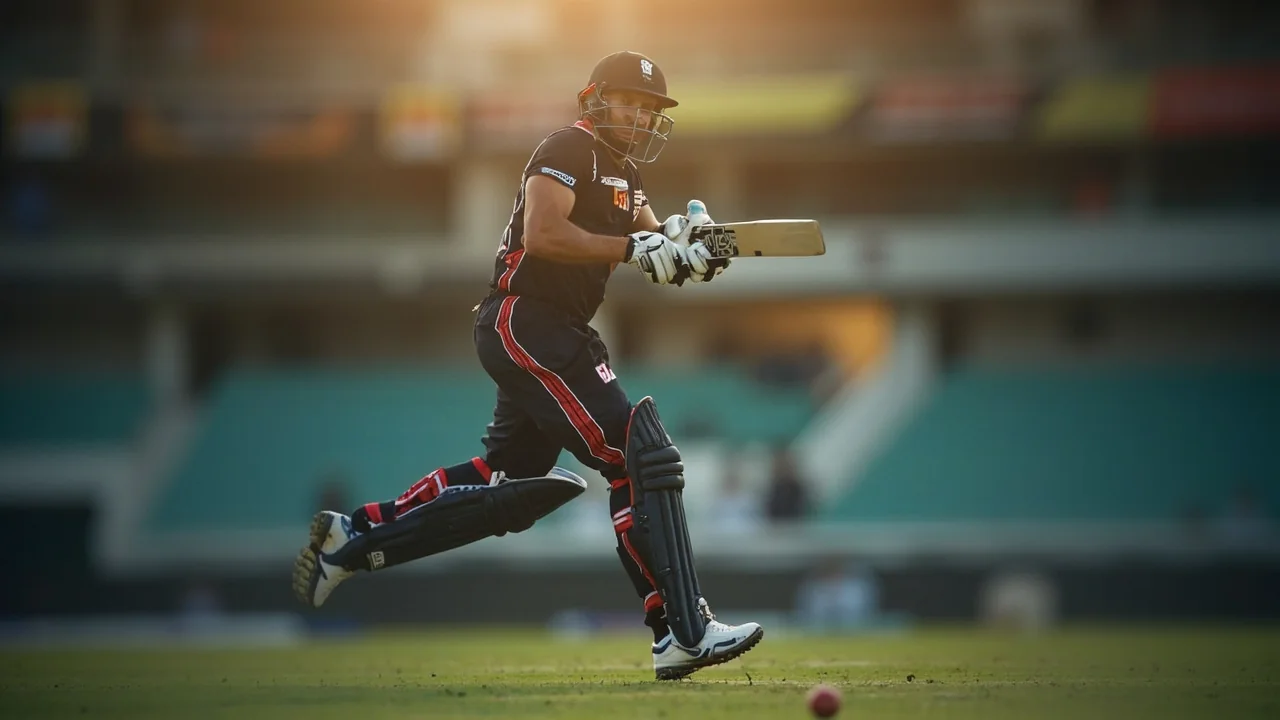
The sixty minutes before toss carry the captain call
Every fantasy cricket contest settles on a single multiplier: the captain's score is doubled and the vice-captain's score carries 1.5x. That two-tier scoring makes the captain call the most leveraged decision in any lineup. The hours immediately before toss compress form, injury, probable XI and pitch into a single readable signal, and most of the alpha in fantasy cricket is captured by the user who treats that hour as a structured reading exercise instead of a quick scroll.
The default habit is to glance at the previous match's points and pick the top scorer. That habit produces a captain call that mirrors the ownership band rather than the win band. The captain row of a winning lineup is almost never the row the public has also picked. The five-step reading framework below is built around that observation: every input is read against the field, not against the player alone.
The framework runs the same way for any format. Twenty-over, one-day and Test captain calls each pull on the same five inputs, only the weights change. In T20 the probable XI and the pitch carry the heaviest weight, in ODI the form index dominates, and in Tests the injury list and the bowling matchup do. Reading each input with the format in mind is what separates a one-line hot take from a captain call that holds up over a season.
Read recent form as a trajectory, not a total
Recent form is the most over-weighted input in fantasy captain calls. Treat the last five innings as a trajectory and the season total as background.

What the last five innings actually say
Season aggregates hide the shape of recent cricket. A batsman averaging 42 with three flat 30s and two centuries reads very differently from a batsman averaging 42 with three ducks and two flat 80s. The captain desk reads the last five innings as a trajectory: slope, volatility and role-fitness. A rising slope with low volatility is the profile a Banker label is built on. A flat or falling slope with high volatility is exactly the profile a Differential label is built on. That is the row that wins ownership-rare contests even when the absolute points total sits below the leader.
Read the injury list before the probable XI
The injury list is the single input most likely to invalidate a captain call made the day before the match.
An injury list at the 24-hour mark is rarely the same list at the toss. The reliable pattern is to track three buckets: ruled out (won't play, drop them from the XI), game-time decision (treat as out for captain math, hedge by selecting their likely replacement in the lineup), and listed but probable (start them in the XI, hold a backup spot if the contest allows late swap). Each bucket changes what the captain call can rest on. Ruled-out players take the form index out of the math entirely. Game-time players pull the hit-rate stamp down by ten to fifteen points for the captain row because the lineup carries their backup instead.
The injury list also sets the bowling rotation. A side resting its leading fast bowler shifts the captain call away from the opposing top order and toward the all-rounder who is promoted up the order in the death overs. Reading the injury list as a rotation signal, not just an availability signal, is the upgrade most casual captain calls skip. The bowler who replaces the rested spearhead often gets an extra over in the powerplay and a guaranteed death over, which is the multiplier stack a captain row is built on.
Reconcile the probable playing XI with the salary cap
The probable XI is the captain call's data anchor. Every other input collapses if the named player is not in the announced eleven.
Most fantasy platforms publish the probable XI 30 to 90 minutes before toss, and the announcement usually matches the morning's leak by 80 to 90%. The captain call has to wait until the actual eleven is named, because two changes in the XI can move the captain row by more than twenty fantasy points. The reading rule is short: never name a captain who is not in the announced XI, and always check that the named captain has a role that will let them bat for the full allocation of overs in T20 or the full middle session in ODI.
Once the XI is set, the captain math runs against the salary cap. A captain pick that forces three bench players into the lineup is a captain pick the user can't afford to make. The reading exercise is to find a captain whose presence in the XI does not distort the rest of the team, and whose role fits the format. In T20 that means the captain is one of the top four batsmen or a death-overs bowler; in ODI it means the anchor at three or four, or the strike bowler at the start of the innings. Reading the probable XI as a role map, not a name list, keeps the captain math inside the salary cap.
Read the pitch report with a venue baseline, not the team sheet
A pitch report is most useful when it is read against the same venue's last 24 matches, not against the team sheet for tonight.

Why the same pitch behaves differently for different sides
Pitch reads break when the reader treats the surface as the only variable. The surface matters, but so does the squad that walks onto it. A green seamer in Chennai behaves differently for a side with two left-arm seamers than for a side that opens with off-spin, and the captain call has to read both. The rule of thumb is to start with the venue's last 24 matches for the format, then check how each captain candidate's side has historically batted on that venue. The cross-product of those two numbers is the pitch multiplier the captain row carries into the lineup.
Read ownership as the field against your pick
The ownership band is not a captain-pick signal. It is a tiebreaker that tells you whether your captain call will move the rank column at all.
Ownership sits at the end of the reading chain on purpose. Reading it first produces a captain call that mirrors the field; reading it last produces a captain call that can win against the field. A captain pick with 45% ownership and a 60% hit rate will score well in absolute points but will rarely move a lineup more than a handful of rank positions, because the rest of the field has already named the same player. A captain pick with 12% ownership and a 60% hit rate scores the same absolute points and moves the rank column by hundreds of positions on a single contest.
The captain desk treats ownership as a three-band scale. Players above 35% ownership with a hit rate above 65% get the Banker label. Players between 15% and 35% with a hit rate above 60% stay unlabelled and serve as the lineup's pivot. Players below 15% with a hit rate above 60% get the Differential label and are the only calls that can single-handedly move a rank column. The reading rule is to pick the role that fits the contest: mega contests reward the Banker, head-to-head contests reward the Differential, winner leagues split the call. Reading the band before locking the lineup turns the captain row from a single decision into a contest-aware decision.
The five inputs collapse into one call inside the last 30 minutes before toss. The captain pick is the player who holds a rising form slope, is named in the XI without a role compromise, faces a pitch that fits their batting or bowling profile, and slots into a contest-appropriate ownership band. When all four conditions hold, the captain call is settled by the contest variant: mega for the Banker, head-to-head for the Differential, winner league for a 50-50 split. The verified captain picks hub publishes the daily band against the same five inputs so the user's own reading can be checked line by line before lock.
Three captain-pick mistakes that survive on every match day
Three reading errors show up in the captain call more often than any other input failure.
Picking the last match's top scorer
Last match's top scorer rarely repeats. A fifty on a flat track reads very differently from a fifty on a green seamer, and the captain call has to read the context. A player with three fifties in the last five innings on mixed pitches is a safer captain pick than a player with one hundred on a single flat track.
Locking before the toss announcement
Locking the lineup before the toss announcement forces the captain call onto a probable XI, not the named XI. A 10% probability of a last-minute change is enough to invalidate the captain math. Always wait for the toss.
Reading only the surface, not the squad
A pitch report that ignores the squad is half a read. The same surface produces different captain calls for different sides because the bowler rotation and the batting order change with the squad. Always cross the surface read with the squad's recent venue record.
The ten-minute captain-pick checklist
Run this in the last ten minutes before toss. Every line should answer yes before the captain cell is locked.
Confirm the captain is in the announced playing XI. Confirm the captain's role fits the format: top four in T20, anchor in ODI, all-rounder in Test. Confirm the captain's form slope from the last five innings is rising, not flat. Confirm the captain's matchup against the named opposition reads at 60% or above on the hit-rate stamp. Confirm the captain's ownership band fits the contest variant: above 35% for mega, below 15% for head-to-head, in between for winner league. Confirm the captain's venue record over the last 24 matches at this surface is at or above the role average. Confirm the salary cap still fits with the captain and eleven in place. Confirm the vice-captain is the next-best pick on the same five inputs, not a sentimental backup. Confirm the captain call matches the contest variant. Lock the lineup 60 seconds before the timer expires.
The checklist runs in roughly the same ten minutes that most users spend scrolling the previous match's points table. The difference is that the checklist produces a captain call with a defensible audit trail, and the scroll produces a captain call that mirrors the ownership band. The audit trail is what carries the season forward: every captain call leaves a record of which inputs were checked and which were missed, and the next match day starts from that record instead of from scratch.
Top tier subtopics
Top tier subtopics for fantasy cricket captain picks.
Top tier ranking
Weekly leaderboard ranks 20 elite players by form, fixture, and ownership. Climb the championship with verified analytics.
9-minute payouts
Top tier payout speed verified across 38,000 winners. UPI/IMPS direct to your bank. No fees, no paperwork.
Pocket app speed
The TopCome pocket app loads in 0.6 seconds on 4G. Preloads captain picks, contest list, and live score before you tap.
Verified everything
Pick hit rates published with sample size. State eligibility checked at sign-up. KYC cleared in 4-8 minutes. No fine print.
Top tier questions
Common questions on reading fantasy cricket captain picks before toss.
How many innings should a captain form read actually cover?
Five is the working number. Three is too short to filter out single-match noise; seven starts to drag in form from a different role or squad context. The last five innings, read as a trajectory, is the form input the captain desk treats as load-bearing.
What if the probable XI keeps changing after the toss?
Treat the announced XI as final. The fantasy contest locks on the announced XI plus any official squad-change window the platform allows. Late changes after the toss are usually handled as a refund or a partial-points adjustment by the platform. The captain call is settled by the announced XI.
Should the vice-captain read use the same five inputs?
Yes, but with two differences. The vice-captain read drops the ownership check entirely, because the vice-captain row carries a 1.5x multiplier instead of the 2x captain multiplier and has a smaller impact on rank. The second difference is that the vice-captain should be the second-best read on the same five inputs, not a sentimental backup.
How is a Banker label different from a high-confidence pick?
A Banker label is published with a sample size and a hit-rate stamp. A high-confidence pick is a feeling. The label carries the same five-input read plus the 5-editor consensus that the platform applies before publication. Banker is the input to weight when the contest variant is mega or winner league.
What is the minimum data I need before locking a captain call?
The minimum is the announced playing XI, the captain's last-five-innings form trajectory, and the captain's ownership band on the contest variant. The pitch read is a tiebreaker. The injury list is a filter. If the captain is on the injury list, the call is invalidated regardless of the other inputs.
Can the pitch read override the form read?
On green seamers in the powerplay, yes. A bowler with a flat form index can still be the captain pick if the surface reads as a seamer and the captain's role gives them four overs up front. The rule of thumb is to give the pitch read a 30% weight against a 50% weight on form, and the remaining 20% on injury plus probable XI plus ownership.
Top tier responsible play
Top tier fantasy is 18+ only. Daily deposit caps and self-exclusion tools are available in the app.

18+, daily caps, self-exclusion
Top tier fantasy is a privilege, not a right. TopCome enforces 18+ only, daily deposit caps, and self-exclusion tools. Two NGOs that provide free counseling for problem gambling are linked from the pocket app settings.
18+ only · Top tier fantasy · 28 of 29 states legal · 9-min average payout verified · Play responsibly